An example of a skilled Filipino watchmaker who wanted to change the old and substandard method in watch repairing in the country and become global but could not afford expensive equipment so he designed and made them and developed the curriculum in watch repair technician. (Story in blog archive October 2009)
Friday, December 3, 2010
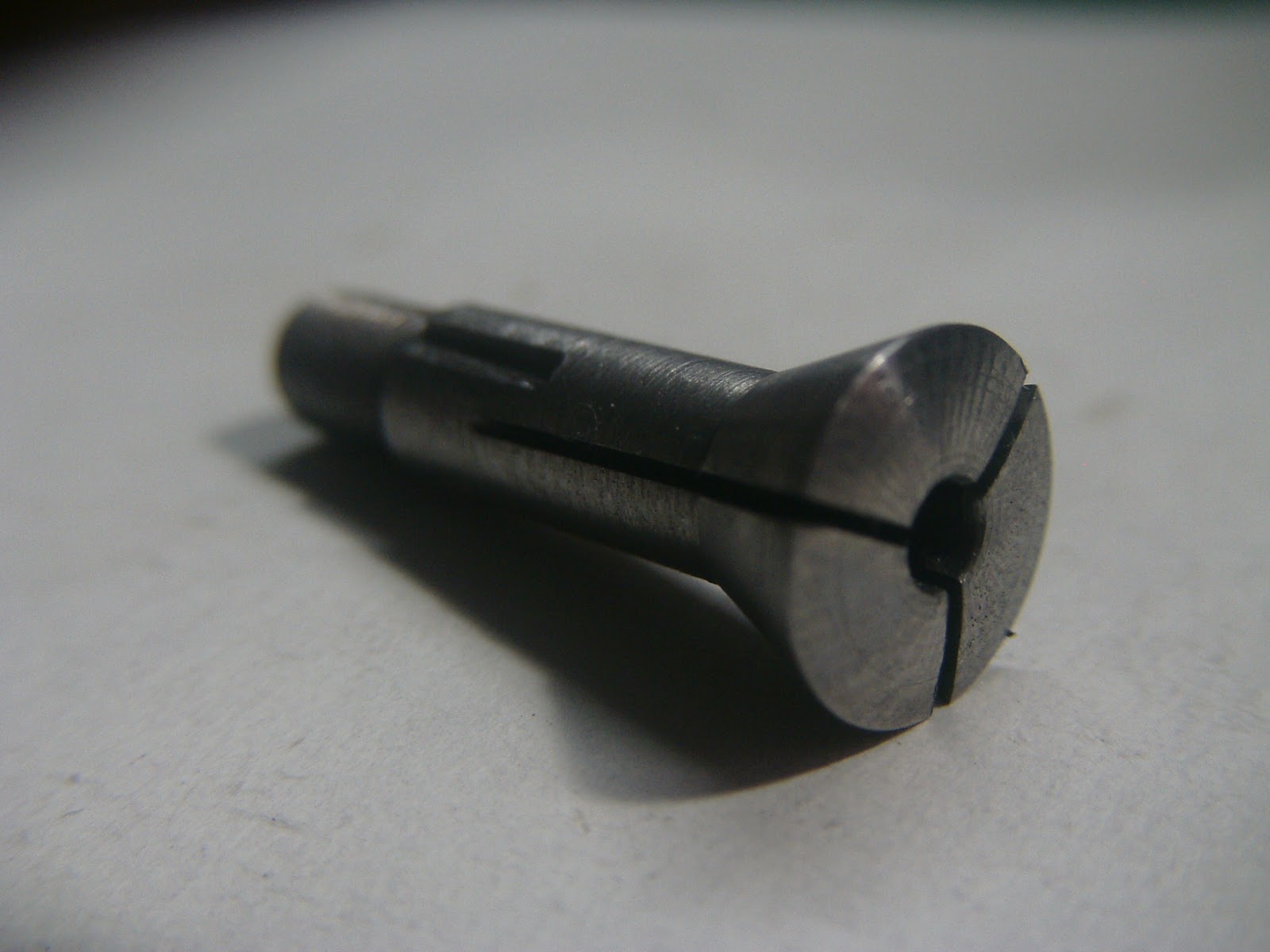
Making my own collet.
When my new mini lathe arrived one of the project that I've tried is the making of my own collet for my watchmakers lathe. Here you can see in the pictures from start to finish.
Sunday, November 21, 2010
This is how it looks now.
Wednesday, July 28, 2010
MY NEWEST TOWER CLOCK INSTALLATION
Thursday, May 20, 2010
My awards
Here are the two awards that I received when two organizations recognized my effort to uplift the lives of my fellow watchmakers through my teachings and my own version of local watch testers. At the left side was a commendation trophy for meritorious achievements as Filipino product awarded to me by NEPA (National Economic Protectionism Association) in November 19, 1993. The other one at the right is an award given to me as "Inventor of the Year 2003" and the engraving says "For improving the manufacture, production and popularization of locally-made materials in the making and repair of watches, and for the technical services he provides to the growing local watch-making industry, and this evidently underscores his exemplary contribution to applied sciences." The award was given to me during the "10th Night of the Leading Top Ten Ceremony in December 30, 2003 at Silangan Hall, Cultural Center of the Philippines.
Tuesday, May 4, 2010
My first indoor giant clock.
I have almost finished working with my new design of indoor giant clock movement and this movement is going to be housed in a frame made of quality wood with an antique design of dial. The size of this clock is 90cm in diameter and the hands are made of aluminum while the movement is all brass and steel. From the past I have installed tower clocks from 1 meter up to 4 meters wide and the movement that I used is really huge and heavy duty and this is the first time that I made smaller movement intended for big hotel lobby, hall, stadium and others.
I have also made my own special cutter to cut the size of gear teeth I need just like in the picture shown.
Tuesday, December 29, 2009
MAKING BALANCE STAFF and ROLLER TABLE
The task: Make a new balance staff and a new roller table (misplaced by other watchmaker).
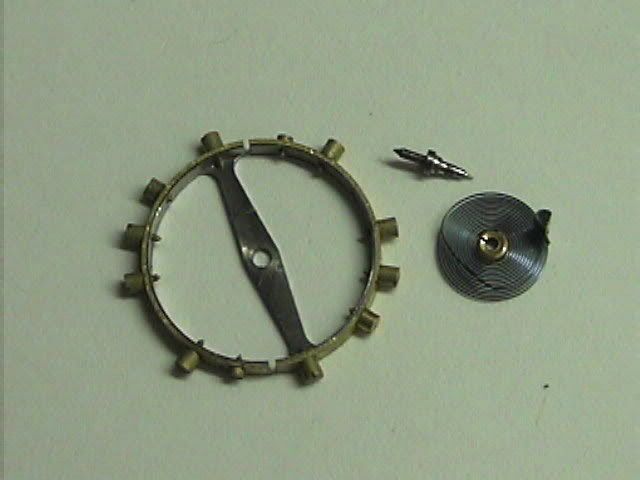
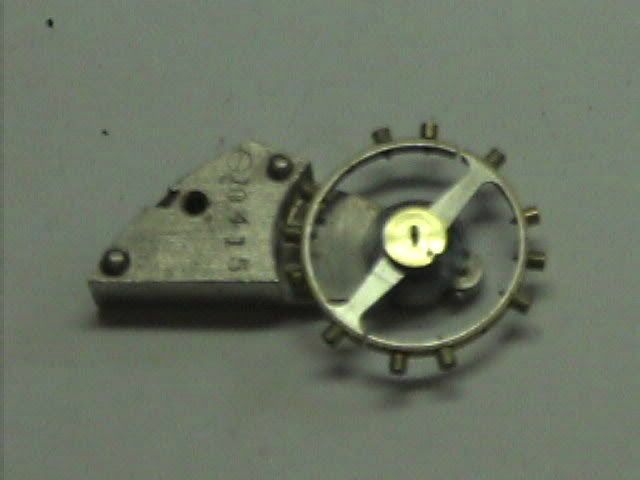
Below: the bimetallic split balance wheel, overcoil (Breguet) hairspring and the damaged staff. Roller is missing.

Israel "le arsi" Angeles - the author
Doing a complicated job like making a new balance staff and a new
roller table is really not an easy task for a 53 -year old Filipino
watchmaker like me. Of course the balance itself could hardly be
trusted for accuracy anymore because of its age and appearance not to mention the number of watchmakers who previously handled it before.
To make it back to normal again and start ticking the way it used to be I think a perfect duplication of the balance staff, fabrication of the missing roller and poising the balance must be done. Thank God! I have this not so complete second hand lathe machine that I bought several years ago from a local watch spare parts and tools dealer in Manila. I have spent quite some time in handling the lathe properly with the help of an American watchmaker’s book the Henry Fried’s Practical
Watch Repairing and some other books from England. I’ve learned the basic turning and shaping of a balance staff out of a scrap piece of steel. Since then I started giving services not only to the public but also to my fellow watchmakers here
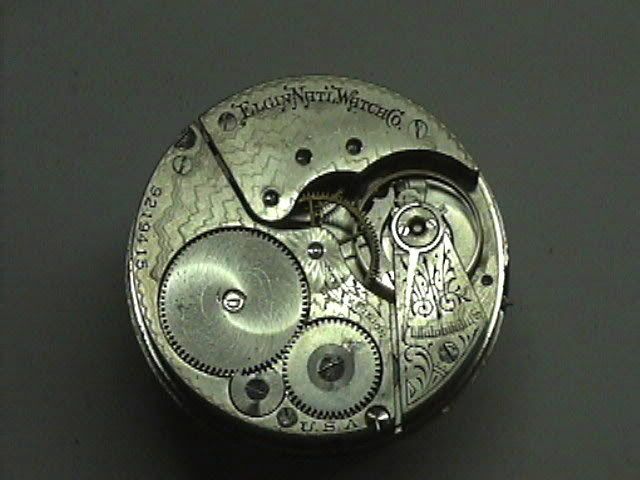
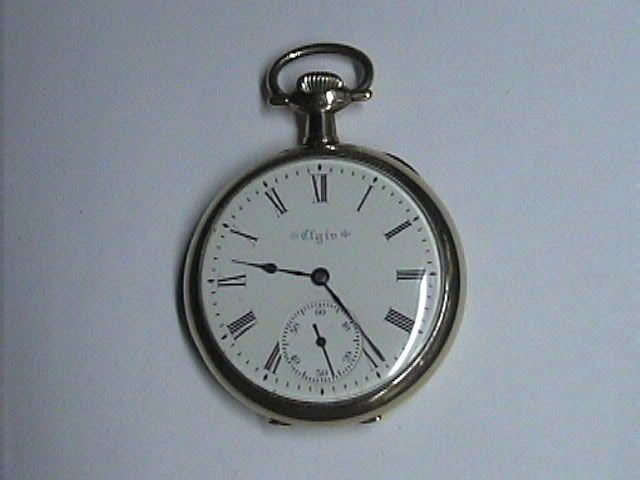
in the Philippines In December 8, 2007 a watch service center in Makati City passed to me two hand made pocket watches named Elgin for repair. Their watchmakers were not able to fix it. The problem of one pocket watch was the rate is going wild while the other has a broken balance staff, unpoised balance and missing
roller table. These are the troubles that usually being denied by
many service centers here in the Philippines because availability
of the parts is just like a dream and a highly skilled watchmaker
is required to fix the problem. And fixing the problem is my daily
tasks on my bench. First, I draw sketch of a staff and measure
the old and broken staff and wrote it down. Next, I choose the
balance staff of a table clock to be the replacement material
because of its bigger size. I first annealed the replacement
material then started shaping a new staff. When the new staff
is 80% done I stop for a while so that I could have some
preparations in tempering it and start the next task- making
the new roller table. The material I used in making the new roller
table came from an old dial made of brass. I cut and shape the
roller table by turning the lathe. Thanks to the convinient and
accurate measurement by my digital caliper. I was able to
measure precisely the original dimension of the old staff and
establish the dimension of the missing roller table.
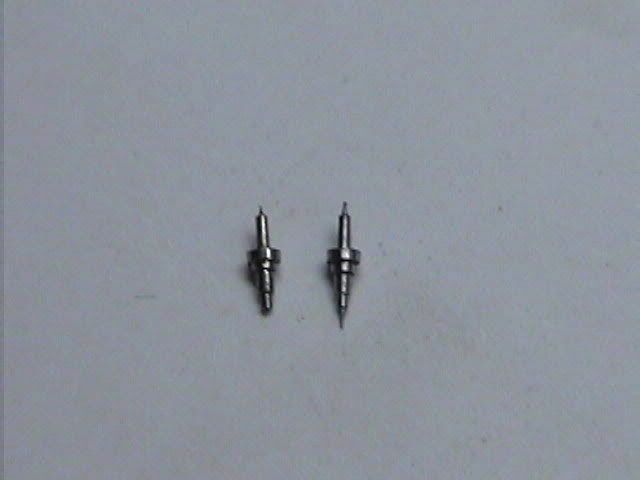
Left is the old staff, right is the replacement I made.
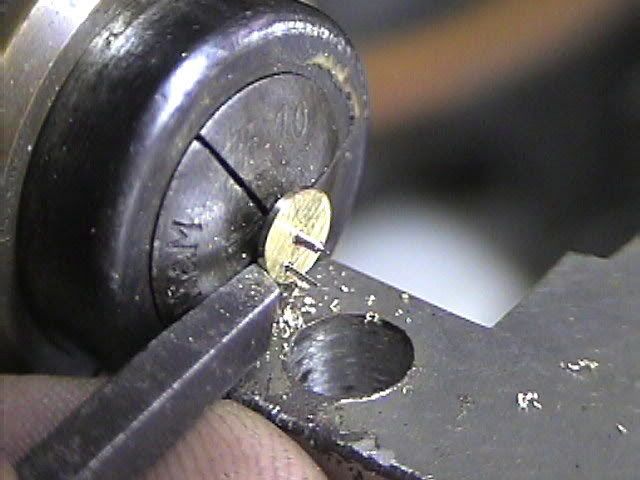
Below is the roller while being cut on my lathe.

The new roller attached already to the balance wheel with new staff.
The roller table was not a common one and I said - missing!
It has only what we so called “isang plato lang na roller”.
So I have to make it myself and find the exact measurement to
produce the replacement. I was able to measure the diameter
of the roller with my digital caliper by finding the precise distance of the center of the balance wheel to the pallet fork and started shaping it with the lathe. I used the old staff as the holder and made a fixture that will prevent the roller from getting loose while turning. Next was to implant a roller pin, again I choosed the roller pin of the old table clock because of its size and hardness. After determining the distance between the staff and the pallet fork I have succesfully implanted the pin and put a notch on it for pallet guard pin. To make the story short I have assembled the balance complete, poised, cleaned, oiled, demagnetized and
timed. The problem of the second pocket watch is just the balance was not poised that’s the reason why the rate is going wild. I found out also that the over-coil hairspring was eccentric and binding at the balance arm. So the second pocket watch is much more easier to do than the previous one. Once more,
another complicated job was done! And it feels good everytime I do this.
Below is the completed movement already working with good amplitude of the balance wheel


The finished job!
Below: the bimetallic split balance wheel, overcoil (Breguet) hairspring and the damaged staff. Roller is missing.
Israel "le arsi" Angeles - the author
Doing a complicated job like making a new balance staff and a new
roller table is really not an easy task for a 53 -year old Filipino
watchmaker like me. Of course the balance itself could hardly be
trusted for accuracy anymore because of its age and appearance not to mention the number of watchmakers who previously handled it before.
To make it back to normal again and start ticking the way it used to be I think a perfect duplication of the balance staff, fabrication of the missing roller and poising the balance must be done. Thank God! I have this not so complete second hand lathe machine that I bought several years ago from a local watch spare parts and tools dealer in Manila. I have spent quite some time in handling the lathe properly with the help of an American watchmaker’s book the Henry Fried’s Practical
Watch Repairing and some other books from England. I’ve learned the basic turning and shaping of a balance staff out of a scrap piece of steel. Since then I started giving services not only to the public but also to my fellow watchmakers here
in the Philippines In December 8, 2007 a watch service center in Makati City passed to me two hand made pocket watches named Elgin for repair. Their watchmakers were not able to fix it. The problem of one pocket watch was the rate is going wild while the other has a broken balance staff, unpoised balance and missing
roller table. These are the troubles that usually being denied by
many service centers here in the Philippines because availability
of the parts is just like a dream and a highly skilled watchmaker
is required to fix the problem. And fixing the problem is my daily
tasks on my bench. First, I draw sketch of a staff and measure
the old and broken staff and wrote it down. Next, I choose the
balance staff of a table clock to be the replacement material
because of its bigger size. I first annealed the replacement
material then started shaping a new staff. When the new staff
is 80% done I stop for a while so that I could have some
preparations in tempering it and start the next task- making
the new roller table. The material I used in making the new roller
table came from an old dial made of brass. I cut and shape the
roller table by turning the lathe. Thanks to the convinient and
accurate measurement by my digital caliper. I was able to
measure precisely the original dimension of the old staff and
establish the dimension of the missing roller table.
Below is the roller while being cut on my lathe.
The roller table was not a common one and I said - missing!
It has only what we so called “isang plato lang na roller”.
So I have to make it myself and find the exact measurement to
produce the replacement. I was able to measure the diameter
of the roller with my digital caliper by finding the precise distance of the center of the balance wheel to the pallet fork and started shaping it with the lathe. I used the old staff as the holder and made a fixture that will prevent the roller from getting loose while turning. Next was to implant a roller pin, again I choosed the roller pin of the old table clock because of its size and hardness. After determining the distance between the staff and the pallet fork I have succesfully implanted the pin and put a notch on it for pallet guard pin. To make the story short I have assembled the balance complete, poised, cleaned, oiled, demagnetized and
timed. The problem of the second pocket watch is just the balance was not poised that’s the reason why the rate is going wild. I found out also that the over-coil hairspring was eccentric and binding at the balance arm. So the second pocket watch is much more easier to do than the previous one. Once more,
another complicated job was done! And it feels good everytime I do this.
Below is the completed movement already working with good amplitude of the balance wheel
The finished job!
Wednesday, November 25, 2009
Installation of 3 Postclocks.
POSTCLOCKS INSTALLATION IN BASILAN, PHILIPPINES
by Israel "le arsi" Angeles
Three days in Superferry we travelled the Philippine sea with three large crates containing three giant clocks (1 meter in diameter each) with two back to back dials and two clock movements each. Our destination- Isabela City, Basilan Province. At first during our travel we always have this question that keeps bothering us. Are we really going to Basilan? Yes!!, Basilan Province to where this terrorisms and stuff like that always filled the media. I will admit kinda nervous out there when we arrived at the Basilan Port. While trying to find whose gonna fetch us as we are informed before, my body language is not normal, you know what I mean. I'm not sure if my 2 companions feels the same but I really tried to behave and alert. Finally, two small vans arrived and from the port we proceeded to the house of the Mayor. The mayor is a beautiful woman, the wife of the late Congressman Wahab Akbar of Basilan- Mayor Cherrylyn Akbar. From her house we went to our quarter just inside the compound of the City Hall. After unpacking of our personal things we started visiting the 3 sites and took measurements. Trying to figure it out if there are some problems to be encountered by tomorrow’s installation Monday. For few hours after we arrived I started to notice the peaceful situation in the city. Unlike what some of my friends have told us back in Manila the city is peaceful and we learned from some folks we’ve met that the battle between the government troops and the rebels is in the mountain about 100 kilometers from the city. Anyway, you can check the pictures that I posted here about the clock installations. Please enjoy, thank you.
We had a lot of experience in the ferry. One of which this “pila” system that you have to fall in line for your meal. Our first “pila” is our breakfast the following day of the trip. We were in our quarter and having conversation when they announces the breakfast time. I remember it was only a minute after the announcement then we proceeded to the canteen. To our dismay the line was already a mile long! Nothing we can do about it, you make pila or pay for your meal. The meals are included in the ticket. So we make pila because we dont want to waste the money that we paid for. But after that we agreed that in lunch time we must go earlier so that we are the first in a row. When the time comes immediately we went to the canteen hoping to be the first or second in the line but we were shocked straight to the bones! It’s more than a mile than before! What we were thinking was also in the mind of all the people there aboard the ship! And so we make pila again reaching the tail end part of the ship ha-ha-ha!
After we arrived at the Zamboanga City port we have to transfer to another ferry to reach the Basilan Province. So after staying one night at Zamboanga City the following day (June 15, 2009) we traveled again for Basilan. At the Isabela City port we were welcomed by some youths showing their skills in swimming in exchange for some coins thrown to them.
After we unpacked our personal things we proceeded to the 3 sites and took measurements of the tower concrete frames. Making sure there are no problem with the frames when we start the installation for tomorrow.
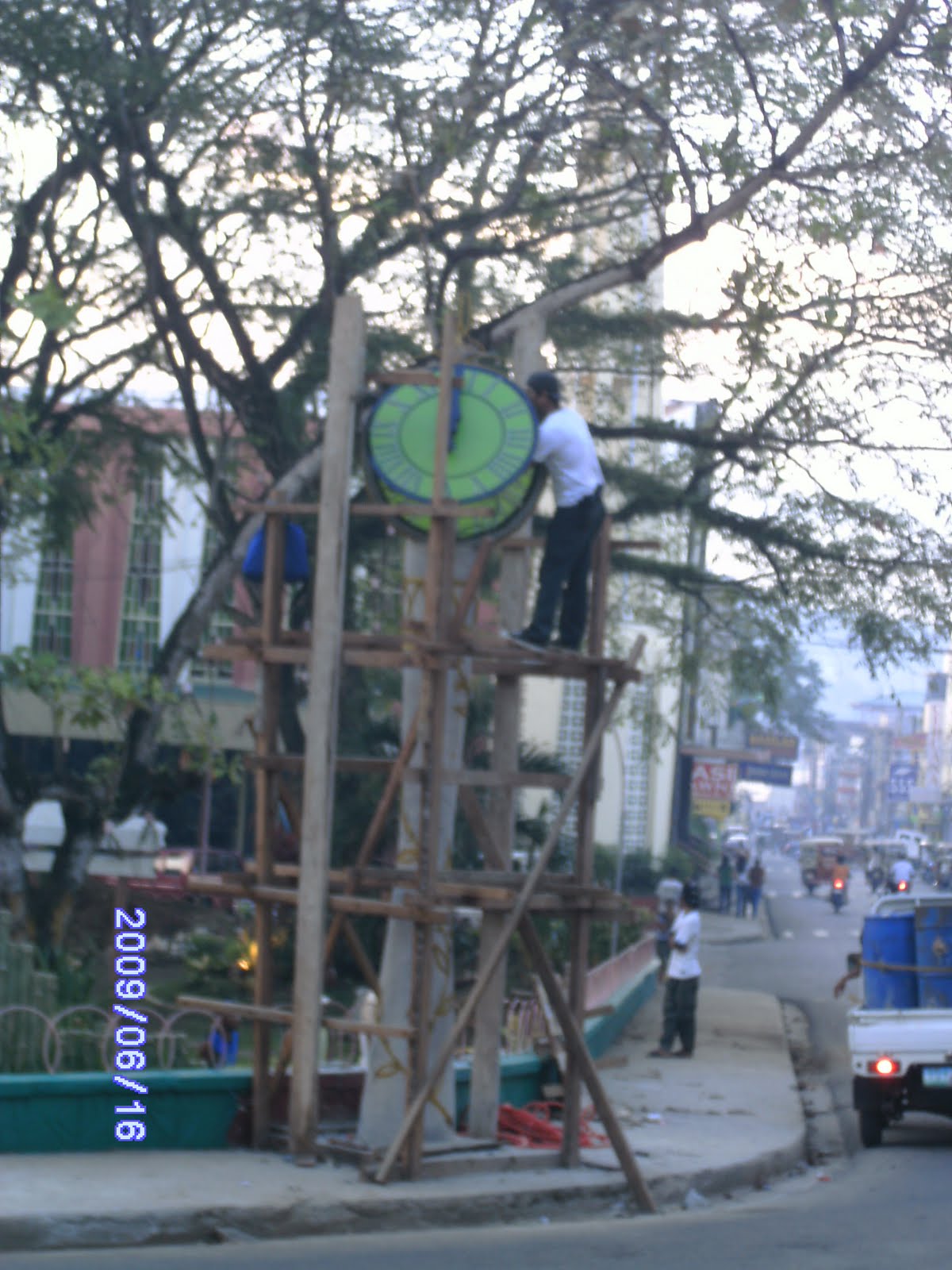
The following day (June 16, 2009) we started removing the clocks from the crates and started the installation.
We first installed the City Hall’s front clock. After having the clock wired by my son Gilbert (who arrived by plane separately) we started installing also the master control located at the ground in concrete box seen in the photo. The master control is my own design and I think the first in the history of Philippine tower clockmaking.
Next, we install the clock at the City Plaza.
And lastly, at the Public Market.
Here in the picture while this two workers are preparing the post for spray painting the lights of the clock was auto activated when night time falls.
But before we completed the installation the Mayor requested to add arabic nos. Rogie, my artist, added the nos. We stayed in the city for 10 days and we went back home by plane along with some pasalubong to the family and friends.
Subscribe to:
Posts (Atom)
Followers
About Me
- le arsi
- Teacher in watch repair technology, awarded as Top Inventor of the Year 2003, tower clockmaker